Health Trends in Afghanistan
/ 5 min read
Author: Tatara Wardag
Between March and April 2025, around 12.6 million people in Afghanistan faced high levels of acute food insecurity, driven by a fragile economy, a reduction in humanitarian assistance and environmental disasters, such as flooding and drought.1 The prevalence of food insecurity in the country highlights the ongoing health crisis in Afghanistan, despite earlier efforts towards improvement. This commentary will examine trends in undernourishment, food insecurity, life expectancy and chronic disease mortality to evaluate the sustainability of health improvements.
Nutrition and Food Security in Afghanistan
Afghanistan has one of the highest rates of stunting, a sign of chronic undernutrition, in children under the age of five (41%).2 Undernourishment results in physical deficiencies such as extreme weight loss, a weakened immune system and impacts cognitive function and behavior.
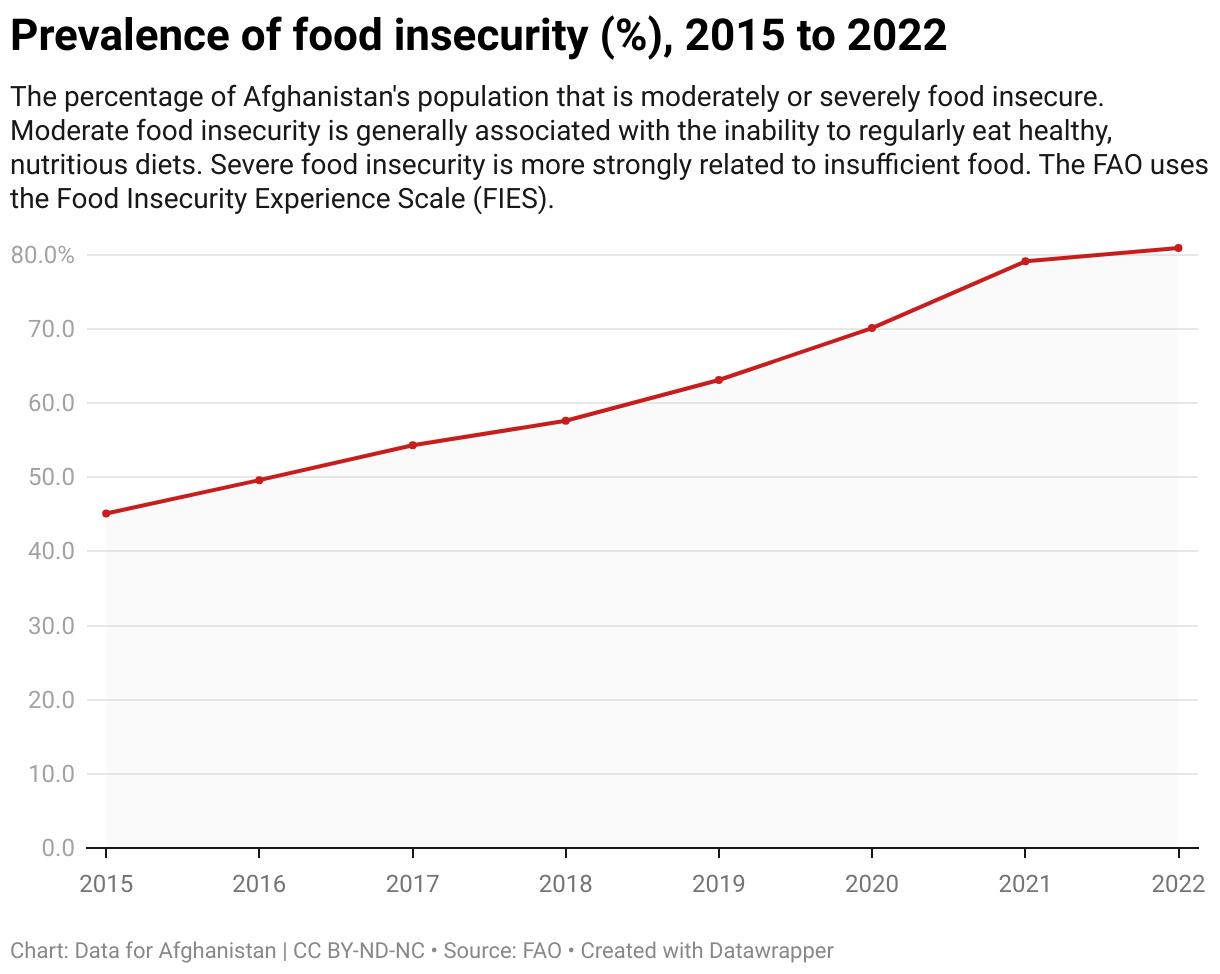
Figure 1 shows that Afghanistan faced a decline in undernourishment between 2001 and 2011, a reduction of 27.7 percentage points. However, from 2011 onwards, Afghanistan experienced a steady increase, with 30.4% suffering from undernourishment in 2022 (see Figure 1). Similarly, Figure 2 emphasizes the health crisis in Afghanistan, with food insecurity increasing from 45.1% in 2015 to 80.9% in 2022. This rise in food insecurity reflects the combined effects of political and economic instability. The 2021 fall of Afghan Republic resulted in international donors suspending most funding, freezing billions of dollars’ worth of assets.3 The increase in food insecurity not only results in a rise in undernourishment levels but also erodes previous development and efforts to sustain the well-being of Afghans.
Figure 1
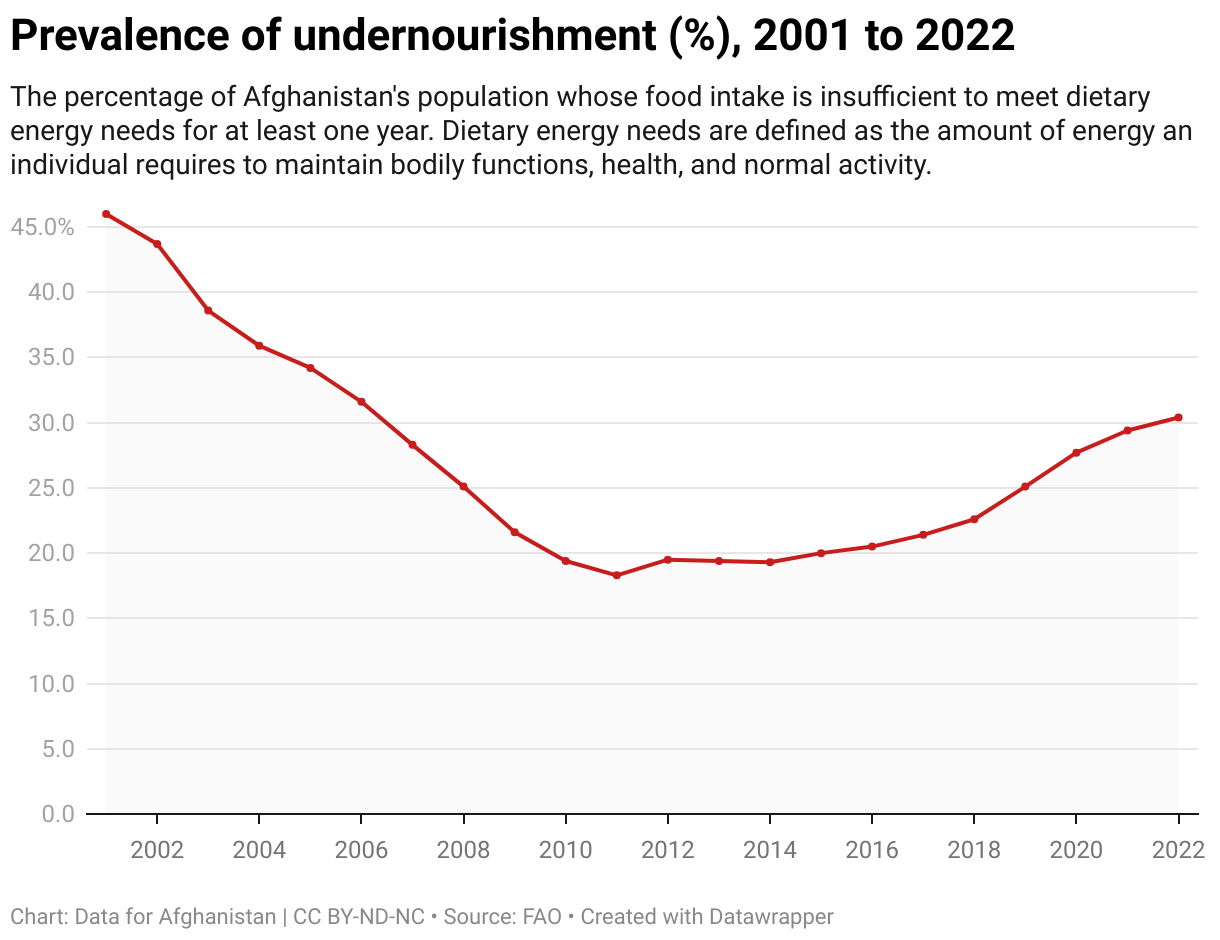
Figure 2
Life Expectancy and Mortality in Afghanistan
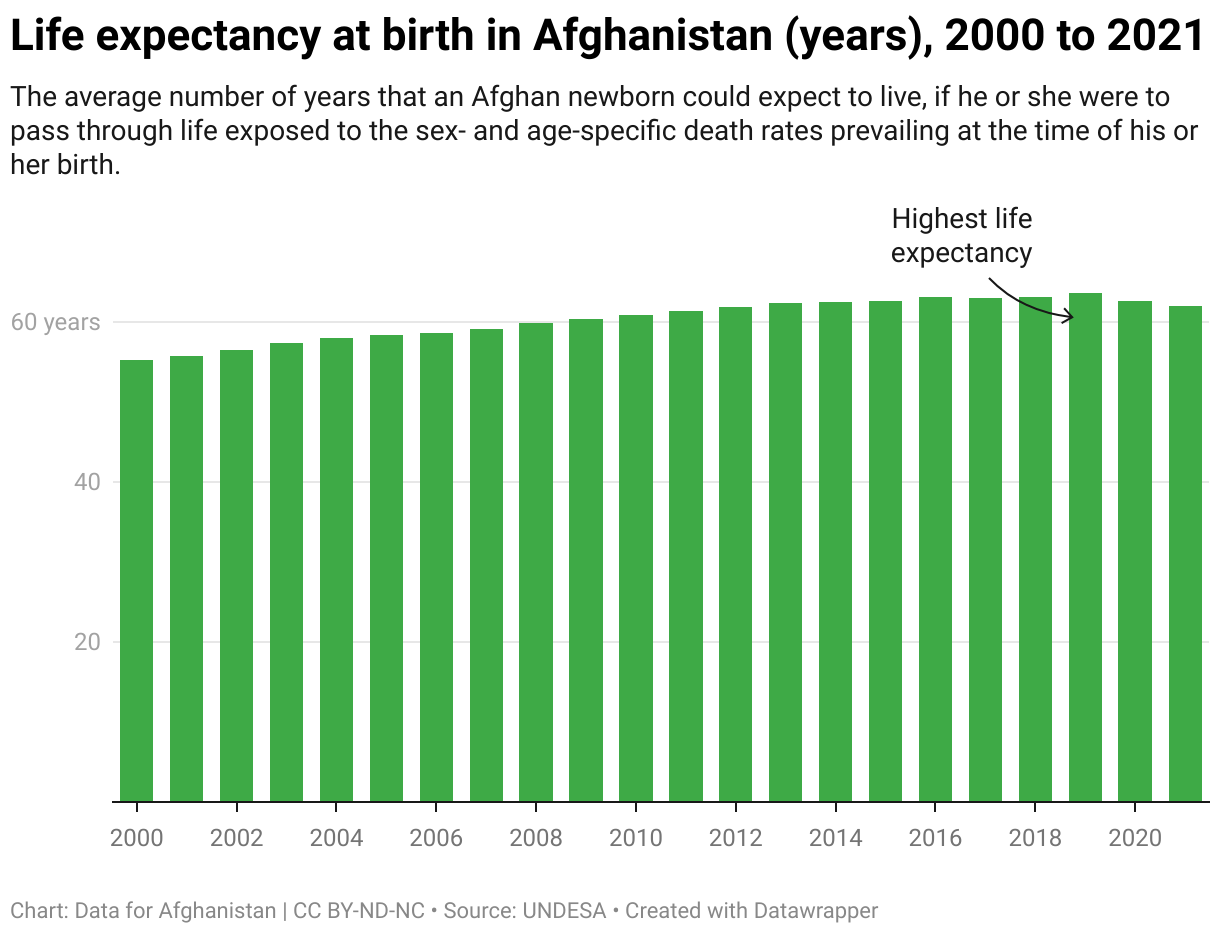
In 2000, life expectancy in Afghanistan was approximately 55.3 years. This is lower than the average life expectancy of the world in 2000, which was 68 years.4 The highest life expectancy level was 63.3 years in 2019, which decreased to 62 years in 2021 (see Figure 3). This rise in life expectancy is reflected by the development of infrastructure and improvements in healthcare and living conditions since the 2000s. The decline in life expectancy between 2019 and 2021 is likely to be linked to COVID-19 and political instability, i.e., the fall of the Afghan Republic in 2021. Alongside political instability, the effects of COVID-19 caused major disruptions to economic growth and development, with rising unemployment and poverty levels affecting millions of Afghans.
Figure 3
Chronic Diseases Death Rate in Afghanistan
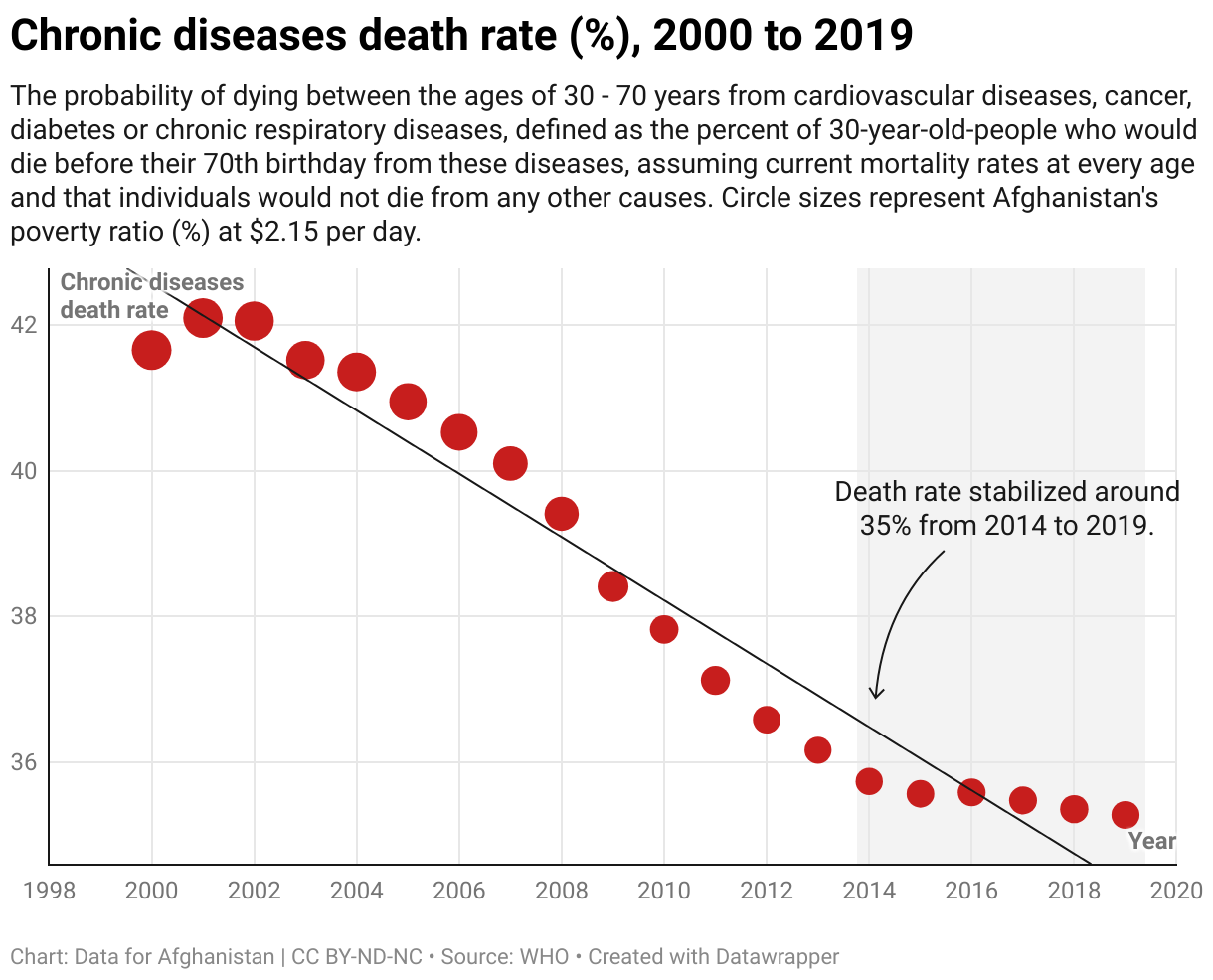
Non-communicable diseases such as cancer and diabetes are important health indicators. Managing chronic diseases often requires trained healthcare workers, a constant medical supply and well-functioning hospitals and clinics. The frequency of chronic diseases can indicate the overall strength and effectiveness of a country’s healthcare system. Figure 4 shows the death rate due to chronic diseases in Afghanistan, where there has been a steady decline from 41.7% in 2000 to around 35.7% in 2014. Possible causes of the decline are due to developments in the healthcare sector through health services packages led by international organizations such as the WHO.5 Between 2014 and 2019, the death rate due to chronic diseases stabilized at around 35%.
Figure 4
Conclusion
While significant progress has been made since the early 2000s, health trends indicate that improvements have not been sustained well. Despite the decline in undernourishment between 2001 and 2011, prevalence of undernourishment has since increased alongside the rise in food insecurity. This reflects the negative impacts of economic conditions and reduced humanitarian support. Similarly, life expectancy improved due to developments in healthcare and living conditions; however, the recent declines highlight the effects of external shocks such as COVID-19 and political instability. Although data displayed a decrease in the death rate from chronic diseases, suggesting success in healthcare provision in the country, the progress remains limited.
These trends suggest that improvements to the overall health of individuals in Afghanistan have been inconsistent and reliant on internal stability and external support. The political instability and lack of humanitarian support, particularly after 2021, emphasizes how easily progress can be reversed. Overall, health outcomes are shaped by many factors, making future progress uncertain.
Footnotes
-
Integrated Food Security Phase Classification (IPC, 2025) Afghanistan: Acute Food Insecurity Situation for March - April 2025 and Projection for May - October 2025. Available at: https://www.ipcinfo.org/ipc-country-analysis/details-map/en/c/1159622/ [Last Accessed: 19/03/26] ↩
-
UNICEF (2016). Nutrition Unicef.org. Available at: https://www.unicef.org/afghanistan/nutrition [Last Accessed: 27/01/26] ↩
-
Crisis in Afghanistan: Unprecedented hunger after the conflict | International Rescue Committee (IRC) (2022) . Available at: https://www.rescue.org/uk/article/crisis-afghanistan-unprecedented-hunger-after-conflict. [Last Accessed 17/03/26] ↩
-
World Bank (2023). Life expectancy at birth, total (years) Worldbank.org. Available at: https://data.worldbank.org/indicator/SP.DYN.LE00.IN [Last Accessed: 27/01/26] ↩
-
Newbrander, W., Ickx, P., Feroz, F. and Stanekzai, H. (2014). Afghanistan’s Basic Package of Health Services: Its development and effects on rebuilding the health system. Global Public Health Available at: https://www.tandfonline.com/doi/pdf/10.1080/17441692.2014.916735?needAccess=true [Last Accessed: 20/02/26] ↩